
Golden hour hits different with your instax™ camera
You know the feeling. The sky goes amber. Shadows stretch long. Everything looks like it belongs on a film set. That's golden hour. Around the summer solstice on 21st June, the UK gets its most daylight of the year, which means golden hour arrives later, lingers longer, and gives you so much more time to actually catch it. The question is: what are you shooting it on?
If you've got an instax™ camera in your bag, you're already sorted. Golden hour shots are where instant film really earns its place. The warm, diffused light does a lot of the work for you. Here's everything you need to get the most out of it.
instax™ tips for shooting in golden hour
A few quick adjustments make a real difference when you're shooting in golden hour light.
Flash off if you can
The ambient light during golden hour is already doing the work. Adding flash on top flattens the warmth and washes out the natural glow. If your camera lets you turn the flash off, do it. On the instax mini 99™, you can manually dial the flash off in seconds. For cameras where the flash fires automatically, try shooting with your subject well-lit by the available light and position them so the sun is doing most of the heavy lifting.
Switch to landscape mode for wide scenes
Going wide? A hilltop, a seafront, an open field? Landscape mode adjusts focus for subjects 3 metres and beyond, keeping distant detail sharp. On the instax WIDE 400™, it's the setting to have on for any big horizon shot.
Put the light on your subject's face
Stand so the sun falls onto your subject rather than behind them. That warm, directional light is what makes golden hour portraits look so good. Side-on works well too for a bit of drama. Just avoid pointing the camera directly at the sun or strong direct light sources or the shot won't come out well.
Dial down the brightness on the mini 99™
The instax mini 99™ has a Brightness Control Dial with five settings, from the lightest exposure to the darkest. In golden hour, nudging it slightly darker helps protect the richness of those warm amber tones. Overexpose and you lose the depth. A small tweak makes a huge difference on the print.
Which instax™ camera to bring
Different cameras bring different strengths to golden hour. Here's the quick version.
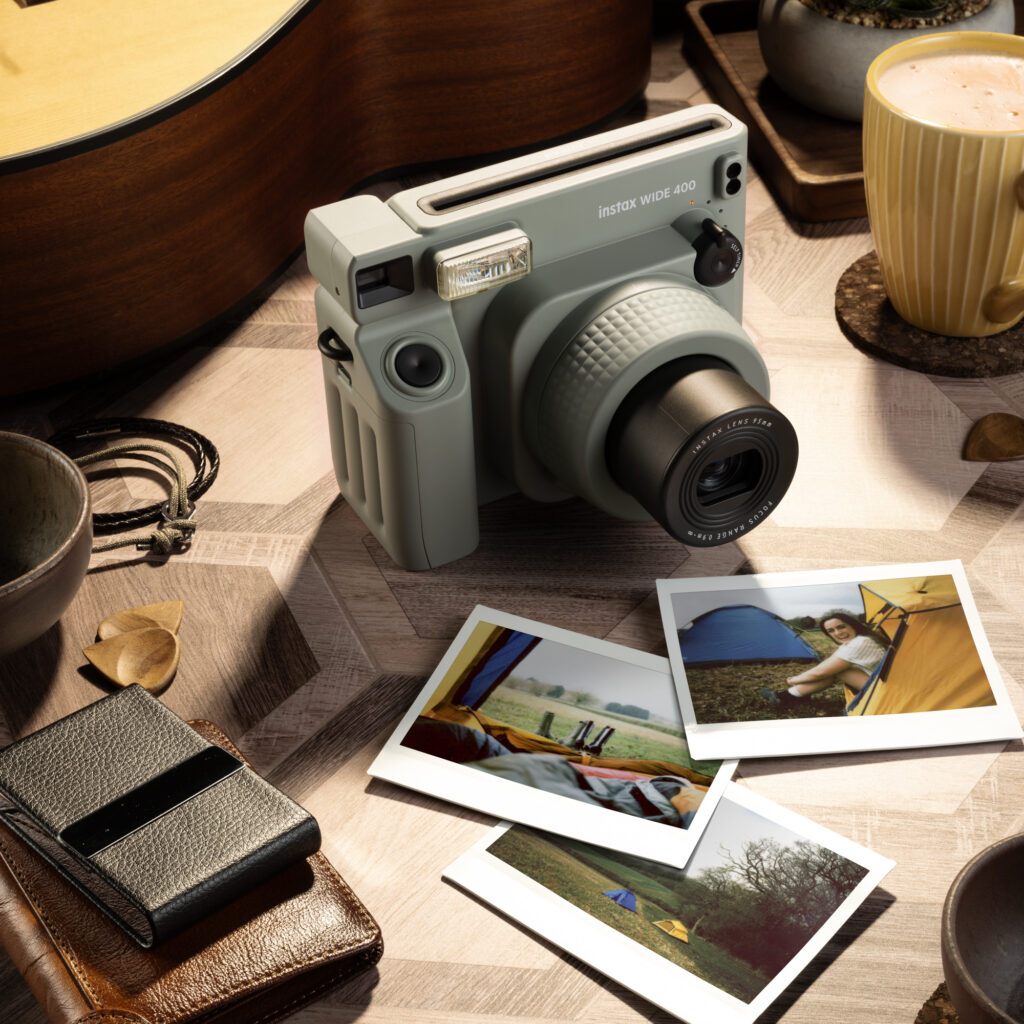
instax WIDE 400™ for the big view
When you want to capture scale, the instax WIDE 400™ is the one. WIDE format film gives you roughly twice the image area of mini, so there's room for the full sweep of a golden hillside, a seafront at low tide, or a group of mates against a sunset sky. Landscape mode handles everything beyond 3 metres.
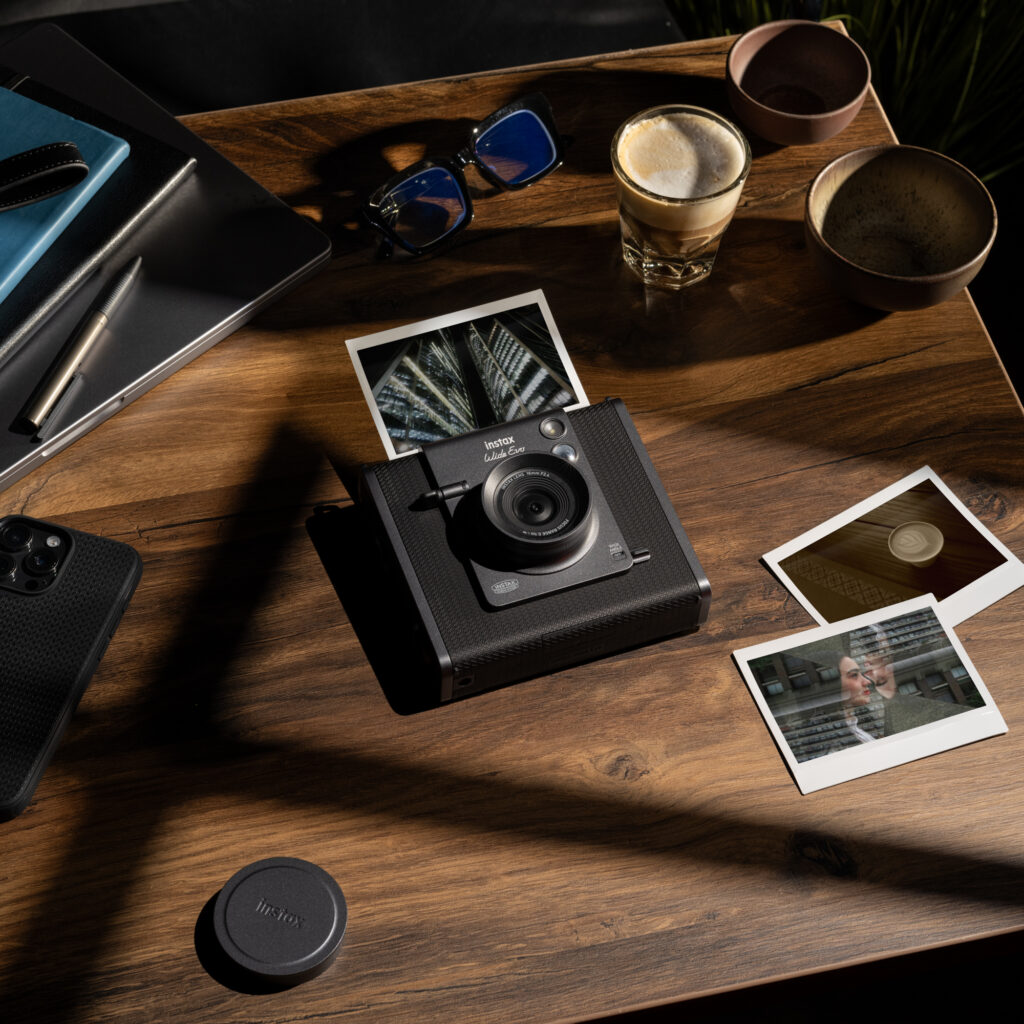
instax WIDE Evo™ for creative effects
The instax WIDE Evo™ is the hybrid pick if you want more creative input. Ten lens effects, ten film effects, and a wide-angle switch that expands the field of view even further. Warm film tones complement golden hour naturally, and the preview function means you're not wasting film on a shot that's off.
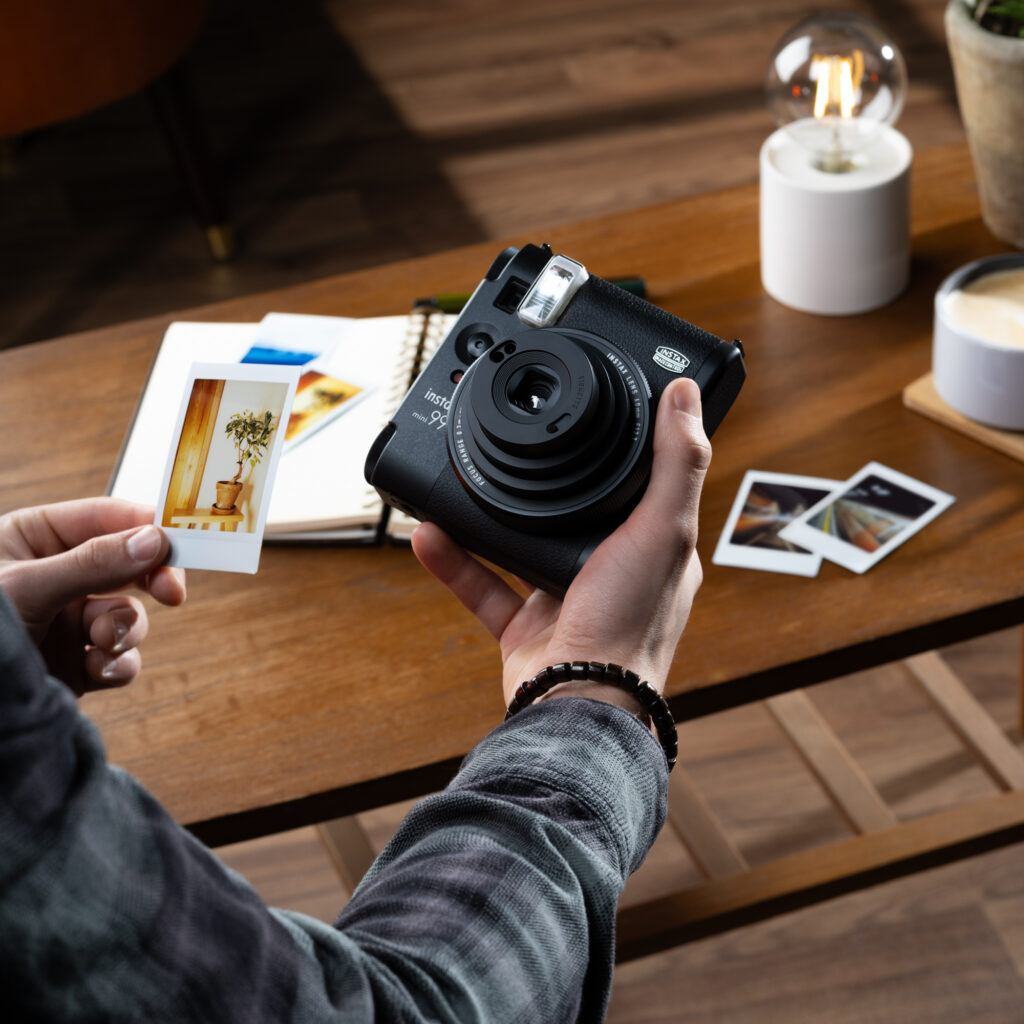
instax mini 99™ for portraits and colour control
The instax mini 99™ is built for people who want actual control over how a shot looks. Its colour effect dial has six options, and the warm tone setting adds a reddish hue that layers beautifully on top of golden hour light. Dial in the brightness, and flip the manual vignette switch to darken the edges of the frame and pull focus inward. The result reads more like an art project than a casual snap.
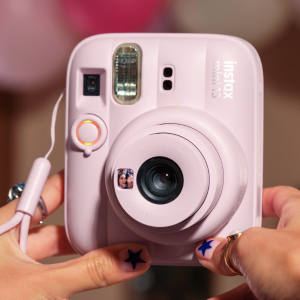
instax mini 13™ for the spontaneous stuff
Not every golden hour shot is planned. Sometimes you're walking home, the sky does something you didn't expect, and you've got maybe two minutes before the light shifts. The instax mini 13™, is built for exactly that. Light, quick to use, and with a new 2-10 second self-timer so you can set it down somewhere stable and actually step into the frame yourself.
Golden hour shot ideas worth trying
A few solid starting points for when you're out there and not sure where to point the camera.
Silhouettes on a hill: find a raised spot, shoot your subject against the sky with flash off. The backlight does the rest. Two or three people together, or someone standing solo, both work.
Reflections in water: a still puddle, a lake, a canal. The reflection doubles the warmth of the scene. Go low and crop it so the reflection takes up most of the frame. On WIDE film there's room for both the sky and the reflection together.
Candid portraits: get a friend talking, distracted, looking off to the side, anything but posing for the camera. Position them facing the light and shoot. The directional golden light picks out all the detail in a way that a posed shot rarely does. These are usually the prints that get kept.
Through something: shoot through tall grass, leaves, or a fence. The foreground softens and frames the subject. Everything picks up amber tones in golden hour, so the effect basically comes free.
Film packs to bring along
Match your film format to your camera: instax™ WIDE film for the WIDE 400™ and WIDE Evo™, instax™ mini film for the mini 99™ and mini 13™. Standard white border film is the go-to for either. The warm tones of golden hour do enough on their own. If you want to strip things back, Monochrome film is worth a pack. Silhouettes, high-contrast dusk scenes, candid portraits where the mood is the whole point.
Stock up before heading out. Film packs are available here in mini, SQUARE, and WIDE.
The 30-day golden hour challenge
If you're after a way to actually build a habit around this, here's something: one instax™ print every day during golden hour for 30 days.
It sounds easy on day one. By day ten you're hunting for different angles because you've shot the obvious sunset three times already. By day twenty you're waking up for the morning golden hour. By day thirty you've got a full pack of prints that actually document a month of summer in a way your camera roll never quite manages.
To keep it interesting, try a loose theme per week: people first, then places, then objects and details, then freestyle. Collect them in an album at the end and see what you made.
The summer solstice on 21st June is the natural start point. Longest day, latest light. From there you've got 30 days through to late July when evenings are still long and warm. Check out the full instax™ camera range to find the right kit before you begin.
Give a golden summer something to hold onto
Golden hour light does something to a print that’s hard to put into words. The warmth, the long shadows, the feeling of a summer evening that isn't quite done yet. instax™ prints capture all of that without effort. No editing, no waiting on a gallery app to load. Just the moment, in your hand, whenever you choose to print it.
Ready to shoot? Browse the full instax™ camera range to find your summer kit, or grab a fresh pack of instax™ film and get out before the season slips by.